Metal Injection Molding · In-house manufacturing
Custom metal parts with MIM
We manufacture complex metal parts for series production. MIM combines metal powder injection molding with binder removal and sintering.
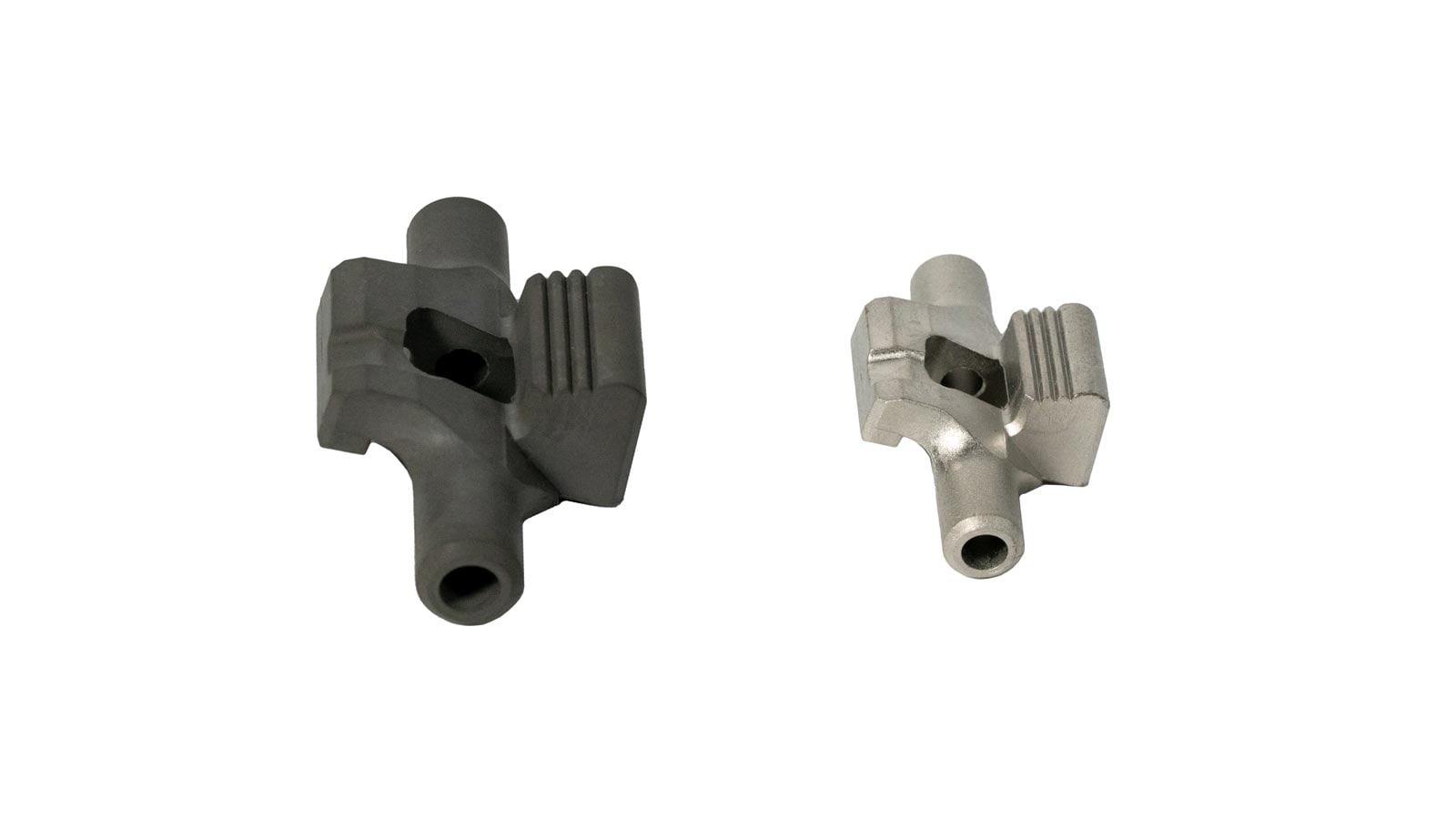
01 · Molded preform
02 · After sintering
The same geometry at different stages. Sintering shrinkage is accounted for in the mold design.
In-house tooling
Molds designed and manufactured at our own production facilities.
Complete MIM process
Molding, debinding and sintering within one company.
Series production
The process is selected for your geometry, material and production volume.
When to choose MIM
We assess the process against the part design, its requirements and the planned production volume.
Complex geometry
Openings, recesses, protrusions and complex contours can be formed in the mold, reducing the number of successive machining operations.
Repeat production runs
Tooling costs are spread across the production volume. At sufficient quantities, MIM can be more economical than machining.
Fewer secondary operations
MIM produces geometry close to the finished part. Individual surfaces and critical dimensions may still require secondary processing.
A single part or a small batch?
Machining may be more suitable for small quantities and simple geometry. We compare possible approaches after reviewing your drawing and production volume.
Machining servicesParts from our MIM production
Actual examples of preforms and finished parts. Open a photograph to examine contours, openings and other geometric features.
1 of 12
In-house MIM manufacturing
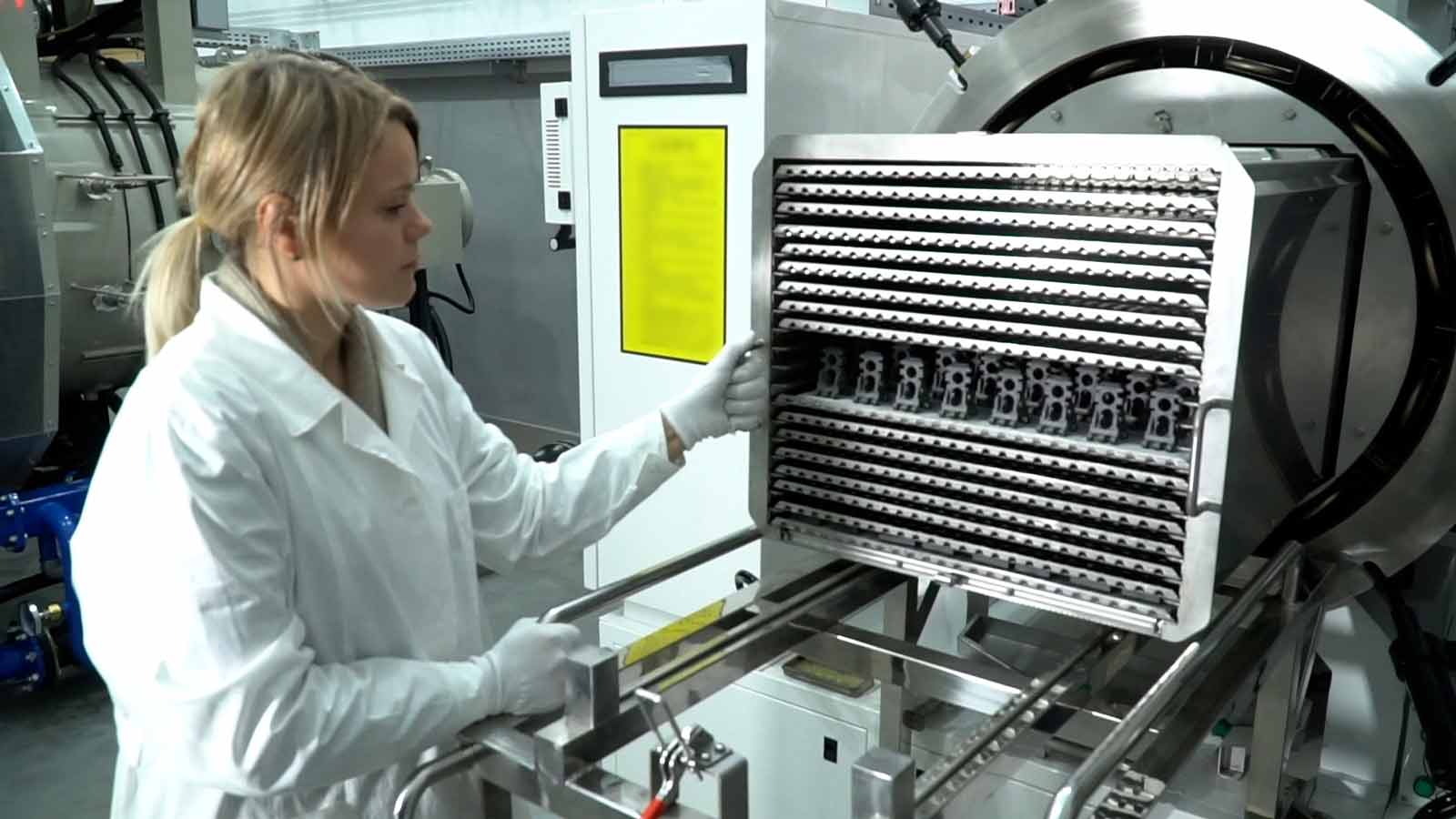
Our tooling and MIM departments work within one company. We connect mold design with the molding and sintering requirements of the final part.
- Mold design, manufacturing and setup
- Injection molding of metal powder feedstock
- Binder removal and sintering
From drawing to metal part
We review part requirements and agree on process decisions before starting production.
Technical review
We review drawings or a 3D model, material, tolerances and quantities to assess whether MIM is feasible and suitable.
Mold manufacturing
We design and manufacture tooling, accounting for part geometry, feedstock properties and sintering shrinkage.
Injection molding
Metal powder mixed with a binder is shaped in the mold. The molded preform is obtained after cooling.
Debinding
Most of the binder is removed, preparing the preform for high-temperature sintering.
Sintering
Metal powder particles bond to form the metal part. The cycle is selected according to the material and requirements.
Inspection and finishing
We check agreed characteristics. Additional operations are performed where required for dimensions and surface quality.
Materials for MIM
We work with the following steel groups. Material selection depends on operating conditions and part requirements.
Stainless steels
For parts requiring corrosion resistance.
Structural steels
For mechanical components and general engineering applications.
Alloy steels
For the required combination of mechanical and service properties.
Tool steels
For hardness and wear resistance requirements.
Heat-resistant steels
For parts operating at elevated temperatures.
The feasibility of using a specific steel grade is confirmed after a technical review of your inquiry.
Quality control
Finished part requirements and inspection operations are defined by the technical documentation.
Geometry and surface
We check dimensions, appearance and other agreed characteristics. Achievable tolerances depend on the material, design and subsequent processing.
Quality management system
The company operates a quality management system certified by TÜV Thüringen to ISO 9001:2015.
Questions before ordering
Which parts are suitable for MIM?
MIM is most often considered for compact metal parts with complex geometry in series production. We assess suitability against the design, dimensions, material and part requirements.
Is MIM economical for small batches?
A mold requires an initial investment, so feasibility depends on the number of parts and the complexity of manufacturing them by other methods. The minimum economical volume is assessed for each order.
How is sintering shrinkage accounted for?
Shrinkage is accounted for during mold design and process preparation. It depends on the metal powder feedstock, geometry and sintering cycle.
What tolerances can be achieved?
Specific tolerances are agreed after reviewing the drawing, material and manufacturing process. Critical dimensions or individual surfaces may require secondary machining.
What determines the cost of an MIM part?
We consider material, part geometry and weight, mold complexity, production volume, quality requirements and additional operations. Send documentation and your planned quantity for a quotation.
What is the manufacturing lead time?
Lead time depends on mold preparation and manufacturing, material, part complexity and batch size. It is agreed after a technical review of the order.
Let’s discuss your MIM part
Send a drawing, 3D model or technical brief. We will assess MIM manufacturing feasibility and clarify the information needed for a quotation.
What helps us assess your inquiry
- Part application, tolerances and surface requirements
- Material or required material properties
- Batch quantity and planned production volume
- Drawings, a 3D model or a technical brief
MIM part manufacturing inquiry form
Sales department