Technical parts made at our own facility
Compression molding of thermosets and rubber
We manufacture parts from AG-4V, phenolic compounds, premixes and rubber compounds to drawings, samples and technical briefs. Our presses provide 100–400 t of force; we can also design and manufacture a mold for your part.
100–400 t
Press force capacity.
Thermosets and rubber
Molding with curing or hot vulcanization.
In-house molds
Tool design, manufacturing and modification.
Materials for your parts
We select molding compounds to suit the part’s application, loads, operating temperatures and electrical insulation requirements.
AG-4V
A glass-filled molding compound based on a modified phenol-formaldehyde binder. For structural and electrical engineering parts.
Phenolic compounds
Thermosetting materials based on phenolic resins with fillers. For housings, structural components and electrical insulation parts.
Premixes
Ready-to-mold composite compounds with a polymer binder and fillers. Properties depend on the specific formulation.
Rubber compounds
For elastic technical parts made by hot compression molding and vulcanization. We select the compound to meet the finished part’s requirements.
We assess the suitability of a specific grade and the finished part’s characteristics after reviewing the technical brief.
From mold to finished parts
We start with your part and the tooling available. The manufacturing approach follows a review of the technical requirements.
Full cycle including mold manufacturing
We design and manufacture tooling in-house. We account for part geometry, molding compound and required press force, then set up the mold and organize part production.
Mold manufacturingProduction with existing tooling
We assess the use of a customer-supplied mold. Before production, we check its condition, equipment compatibility, required force and operating temperature.
Equipment and molding process
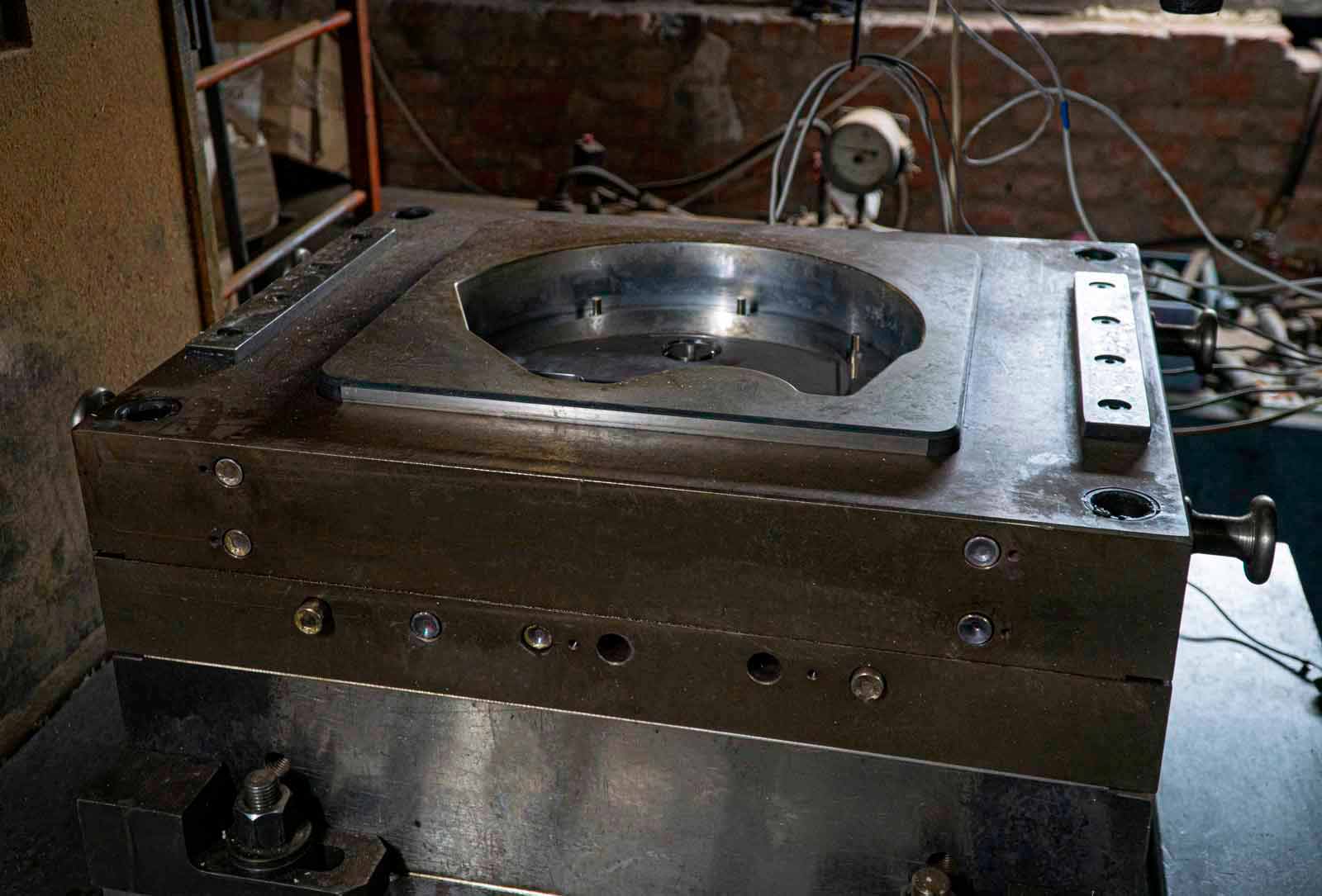
Presses with 100–400 t of force
We place the prepared material directly into the mold. Under heat and pressure, it fills the cavity and takes the shape of the part.
- We assess feasibility from the part geometry, dimensions and required force.
- Material preparation and process settings depend on the specific grade.
- We can manufacture, repair or modify tooling at our own facility.
Thermoset compression molding
The compound is shaped and cured in a heated mold. Temperature, pressure and holding time depend on the material properties and part design.
Hot vulcanization of rubber
We shape and vulcanize the rubber compound in the mold. Process settings depend on the formulation, part geometry and required performance.
Parts from our production facility
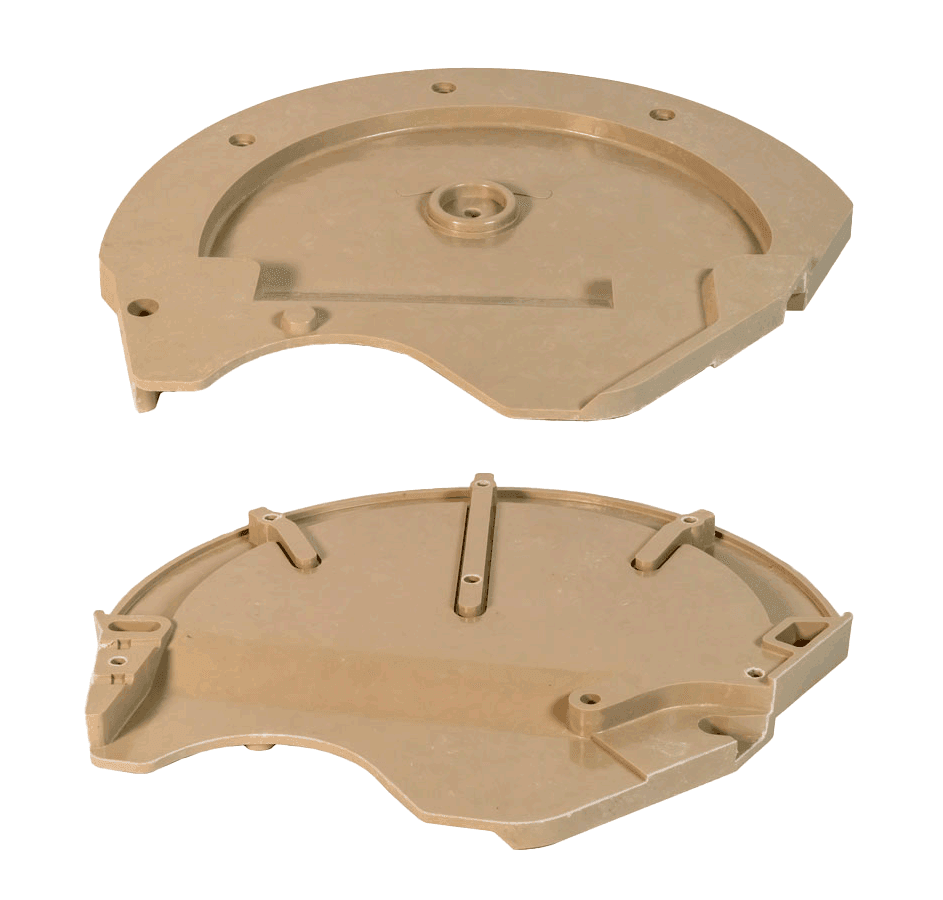
Examples of compression-molded parts. Open a photograph to examine the part’s shape and surface in more detail.
1 of 20
From technical brief to a batch of parts
We agree on the input data, prepare the tooling and inspect the finished parts.
Brief review
We review a drawing, 3D model or sample and clarify the application, material, quantity and part requirements.
Process planning
We assess molding feasibility, equipment and the existing mold, or establish the requirements for new tooling.
Quotation and agreement
We prepare a quotation covering material, batch size, tooling and additional operations, then agree on the order terms.
Production preparation
We manufacture or modify the mold where needed, prepare the material and set up the equipment.
Part molding
We mold parts using the specified process, with thermoset curing or rubber vulcanization.
Finishing and inspection
We remove flash and carry out additional finishing where required, inspect the parts and deliver the finished products.
Inspection to your part requirements
Acceptance criteria follow the agreed technical documentation.
Process preparation
Before production, we consider material properties, part design and tooling condition.
Geometry and surface
Our quality control department checks dimensions, appearance and other agreed characteristics.
Finishing operations
Flash removal, cleaning and additional finishing follow the order requirements.
Quality management system
The company operates a quality management system certified by TÜV Thüringen to ISO 9001:2015.
Questions before ordering
Which materials do you mold?
We work with AG-4V, phenolic compounds, premixes and rubber compounds. We assess each specific grade against its processing characteristics and the part requirements.
How does compression molding differ from injection molding?
In compression molding, material is placed directly into the mold and formed under heat and pressure. In injection molding, material is fed into the cavity through the molding machine’s runner system. The choice depends on the material and part design.
Can I order parts without an existing mold?
Yes. We have in-house tooling facilities for mold design and manufacturing. We agree on the mold design and production terms after reviewing your brief.
Can you use a customer-supplied mold?
We assess this after checking the tool’s condition and compatibility with our presses. We need the mold specifications and information about the part and material.
Do you manufacture small batches?
We assess feasibility and cost individually. Part design, material and existing tooling affect economic viability: a new mold adds to the overall order cost.
What determines the cost and lead time?
Material, part geometry, quantity, mold condition or complexity, cycle time and additional operations. We determine the cost and lead time after reviewing the technical documentation.
Let’s discuss your molded part
Send a drawing, 3D model, sample or technical brief. We will assess manufacturing feasibility and clarify the information needed for a quotation.
What helps us assess your inquiry
- Part application, dimensions and surface requirements
- Material grade or required properties
- Part quantity and availability of an existing mold
- Drawing, 3D model or technical brief
Compression-molded part manufacturing inquiry
Sales department