Plastic injection molding is one of the key methods for serial production of plastic products. Housings, technical assemblies, caps, fasteners, household and industrial parts — most of these are made by injection molding. When the part, tooling, and process are properly engineered, injection molding can provide high productivity, repeatability, and a competitive unit cost in serial production.
Molding itself, however, is only one stage. Stable serial output requires a full production cycle: part-design analysis, material selection, mold design and manufacturing, trials, process setup, quality control, and ongoing tooling service. Promservice can support a project from the initial data through to serial batches and mold maintenance. Below, we explain what this cycle includes and why every stage affects the result.
What injection molding is — in brief
Injection molding is a process where molten polymer is injected under pressure into a closed mold cavity, cooled, and solidified to take the shape of the part. The mold then opens, the part is ejected, and the cycle repeats.
A typical cycle on an injection molding machine (IMM) includes:
- plastication: heating, melting, and metering the material in the barrel;
- injection of the melt into the cavity;
- holding pressure (packing) to compensate for shrinkage;
- cooling the part until it is safe to eject;
- mold opening and part ejection;
- mold closing and the start of the next cycle.
Cycle time depends on part size, wall thickness, polymer grade, mold design, and quality requirements. It can be measured in seconds for smaller parts and be considerably longer for massive or technically complex products. Serial productivity comes not only from a short cycle but from its stable repeatability.
Stage 1. Part and manufacturability analysis (DFM)
The full cycle begins not with machining the mold but with a DFM review: evaluating whether the part design is suitable for efficient and stable injection molding. Engineers assess whether the required part quality can be achieved without unjustified tooling complexity.
Typically checked:
- wall thickness and its uniformity (abrupt transitions cause sink marks and warpage);
- presence of draft angles for part ejection;
- placement of ribs, bosses, holes;
- parting lines, gate locations, and flow paths;
- potential air traps and weld line zones;
- inserts and moving parts (slides) where needed.
Changing geometry in a 3D model is usually much faster and less expensive than reworking a finished steel mold. A DFM review therefore reduces technical and financial risk before production starts.
Stage 2. Material selection
The polymer choice drives both the part properties and the mold design. This stage accounts for service conditions, loads, temperature, chemical resistance, appearance, and cost.
The most common materials: ABS, polypropylene (PP), polyamide (PA, nylon), polycarbonate (PC), POM (acetal), polyethylene (PE), as well as filled compounds (e.g., glass fiber) and engineering plastics for special tasks.
Important: shrinkage depends not only on the polymer grade but also on part geometry, filler orientation, and process settings. These factors are considered when dimensioning mold-forming features and are confirmed during trials.
Stage 3. Mold design
The mold is the heart of the whole cycle. Its design determines part quality, process stability, and tool life. At this stage, engineers develop:
- the number of cavities based on planned production volume, part size, clamping force, and IMM shot capacity;
- the runner system — cold or hot runner;
- gate locations and cavity fill balance;
- the cooling system for a short cycle and minimal warpage;
- venting for air and gas escape;
- the ejection system (ejector pins, plates, strippers);
- slides, collapsible cores, or other moving elements for undercuts and complex geometry;
- serviceability — replaceable inserts in wear zones.
All of these systems are designed together because they affect one another. Cooling, for example, ties to cycle time and warpage, while venting ties to burn marks and short shots.
Stage 4. Mold manufacturing
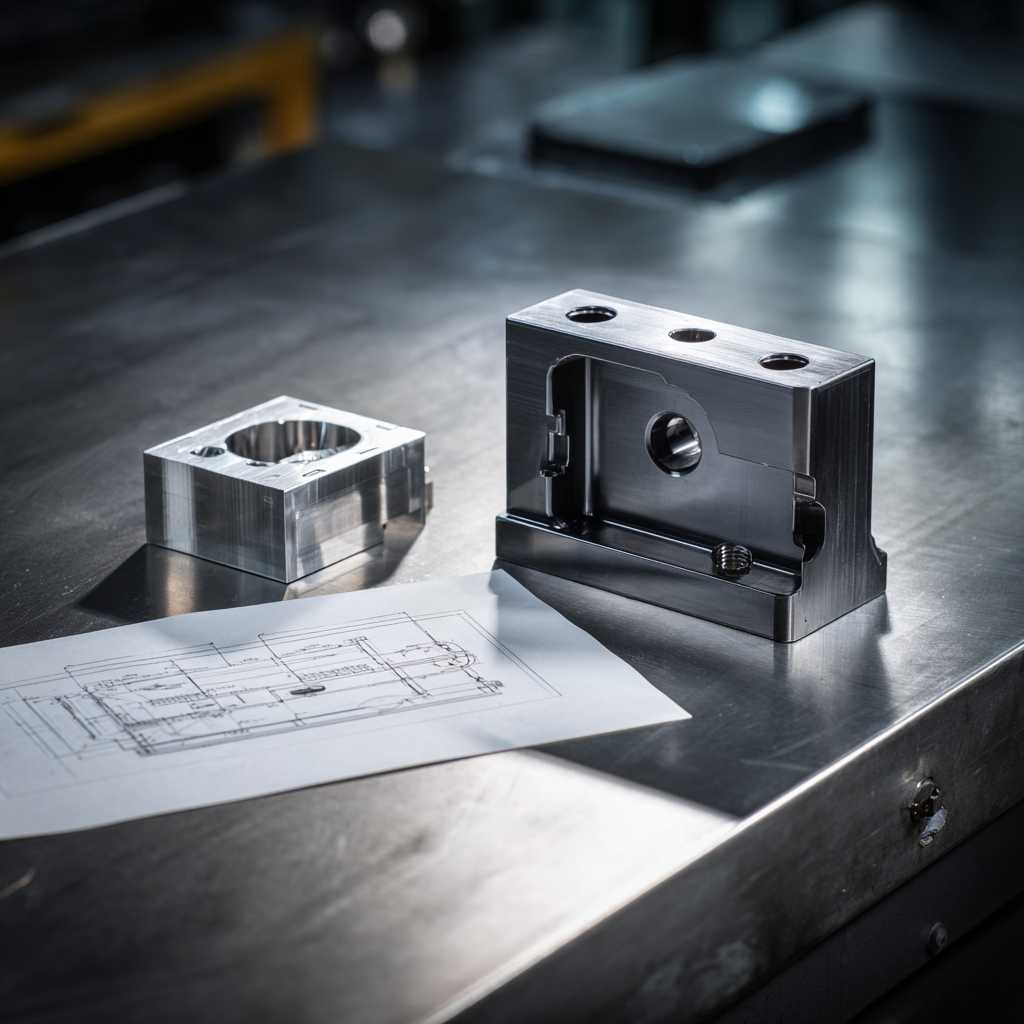
After design, the mold is manufactured in the toolroom. This is the most complex part of the cycle, combining several machining technologies:
- CNC milling of cavities and plates, including HSM machining of hardened steels;
- turning for rotational parts (bushings, cores, inserts);
- EDM (electrical discharge machining) — wire and sinker — for complex contours, sharp corners, and deep cavities in hard steels;
- grinding and jig-bore work for precise fits;
- polishing or texturing of molding surfaces;
- assembly, fitting, and adjustment of the mold.
Promservice performs all of these in-house, which gives control over quality and lead times at every step.
Stage 5. Trials and process setup
The finished mold is installed on an IMM and trial shots are produced. The first samples are analyzed for fill completeness, dimensions, appearance, and defects.
At this stage, the processing window is established, including:
- melt and mold temperatures;
- injection speed and profile;
- holding pressure and time;
- cooling time and overall cycle;
- ejection settings.
The purpose of trials is not merely to produce one visually acceptable part. It is to select robust conditions under which quality is maintained despite normal process variation. When required, venting, cooling, gating, ejection, or individual mold-forming components are refined.
Stage 6. Serial production
Once quality is approved, serial production begins. Here stability and rhythm take priority:
- consistent settings cycle to cycle;
- control of material preparation and drying when required for the selected polymer;
- periodic measurement of critical dimensions and part weight;
- visual surface inspection;
- packaging and logistics on the customer's schedule.
A properly tuned serial process delivers predictable cost and quality batch after batch.
Stage 7. Quality control
Control runs through the entire cycle, but in serial production it becomes systematic. Checks include:
- incoming material (grade, batch, conformity to specification; moisture where relevant);
- dimensions and tolerances of critical features;
- appearance (burns, weld lines, sink marks, flash);
- functional parameters on demand (fit, leak-tightness, strength).
For critical products, measurement reports are prepared. This matters especially when parts go into assembly lines with strict requirements.
Stage 8. Tooling service and storage
A mold is a production asset whose service life depends on its design, selected steels, polymer type, fillers, processing conditions, and maintenance quality. Planned service is needed to preserve stable output:
- scheduled maintenance and cleaning (including cooling channels and vents);
- repair and restoration of worn surfaces, edges, and fits;
- modernization (improved cooling, added venting, replaceable inserts);
- preservation against corrosion and proper mold storage between runs.
Planned maintenance helps reduce the risk of unplanned downtime and extend the mold’s working life.
Why a full cycle in one place pays off
When each stage is handled by a different contractor, "responsibility gaps" appear: the designer blames the molder, the molder blames the mold maker, and the customer is left with scrap and lost time.
A full cycle with one production partner provides:
- single accountability for the result — from drawing to series;
- aligned decisions — the mold is designed for the actual material and process;
- faster iterations — mold refinement needs no logistics between contractors;
- more manageable lead times and costs;
- long-term service of the same tooling by the same engineers.
Promservice capabilities
Promservice is a full-cycle manufacturing partner for plastic product production in Ukraine:
- drawing and manufacturability analysis (DFM);
- material selection for the task;
- mold design (cold and hot runner, complex geometry);
- tooling manufacture in-house (CNC, EDM, grinding, polishing);
- plastic molding on IMM — from small series to high-volume production;
- insert molding and hybrid tasks;
- quality control, repair, modernization, and mold storage.
We can join at any stage — or run the project end to end, from idea to finished product.
Need a complete plastic injection molding cycle?
Send us a drawing or 3D model, information about the material, part requirements, and expected production volume. Promservice specialists will assess part manufacturability, recommend an appropriate mold concept, and prepare the initial data needed to start serial production.
We provide the complete cycle: mold design and manufacturing, trials and refinement, as well as serial production of plastic parts on our own injection molding machines.